
Some thoughts on Design Thinking - for Your Story
https://yourstory.com/2018/11/crafts-games-design-principles/
From the article above:
Design thinking
Design themes cutting across sectors today include design thinking. “Design thinking is at the core of effective strategy development and organisational change. You can design the way you lead, manage, create and innovate. The design way of thinking can be applied to systems, procedures, protocols, and customer/user experiences,” Suprita explains.
The purpose of design, ultimately, is to improve the quality of life for people and the planet, she adds. (See also my reviews of the books101 Design MethodsandSolving Problems with Design Thinking, and the frameworkThe ‘8 Is’ of Design Thinking for Startups.)
“The biggest misconception that pervades industry today is that design thinking can somehow be taught in a short workshop. The best outcome of these short courses is to develop an understanding of and appreciation for the power of design, and for organisations to bring designers into strategic roles,” explains Abhimanyu Nohwar, Founder-Director of Kiba Design.
But in some cases, it is taken as another skill development workshop, leading managers to feel they are now able to understand the importance of design better than designers, he cautions.
It takes years to “think and see like a designer,” to understand the physical, social and cultural structures of the world around us, its representation through sketching, and the elements of design, composition, colour and form. “The design process is a culmination of all these learned skills working together in harmony to understand a problem and define ways of dealing with it,” Abhimanyu explains.
However, unlike most management processes, design isn’t a purely rational process, and relying equally on intuition and rationality is one of its greatest strengths. “Unfortunately, design thinking is being understood as yet another rational process-driven methodology to achieve innovation,” he laments.
Organisations need to do the hard work of internal restructuring by including creative thinkers and designers in strategic roles and integrate creative problem-solving methodologies across disciplines with an eye to organisational transformation, rather than simply sending top management to “learn design thinking,” Abhimanyu urges.
Thoughts on Intuitive Design - in The Hindu
My thoughts on ‘intuitive design’, published in The Hindu in November 2018.
https://www.thehindu.com/life-and-style/intuitive-is-all/article25518648.ece
The article from the link is below, for the full article see the link above.
Design thinking
Design themes cutting across sectors today include design thinking. “Design thinking is at the core of effective strategy development and organisational change. You can design the way you lead, manage, create and innovate. The design way of thinking can be applied to systems, procedures, protocols, and customer/user experiences,” Suprita explains.
The purpose of design, ultimately, is to improve the quality of life for people and the planet, she adds. (See also my reviews of the books 101 Design Methods and Solving Problems with Design Thinking, and the framework The ‘8 Is’ of Design Thinking for Startups.)
“The biggest misconception that pervades industry today is that design thinking can somehow be taught in a short workshop. The best outcome of these short courses is to develop an understanding of and appreciation for the power of design, and for organisations to bring designers into strategic roles,” explains Abhimanyu Nohwar, Founder-Director of Kiba Design.
But in some cases, it is taken as another skill development workshop, leading managers to feel they are now able to understand the importance of design better than designers, he cautions.
It takes years to “think and see like a designer,” to understand the physical, social and cultural structures of the world around us, its representation through sketching, and the elements of design, composition, colour and form. “The design process is a culmination of all these learned skills working together in harmony to understand a problem and define ways of dealing with it,” Abhimanyu explains.
However, unlike most management processes, design isn’t a purely rational process, and relying equally on intuition and rationality is one of its greatest strengths. “Unfortunately, design thinking is being understood as yet another rational process-driven methodology to achieve innovation,” he laments.
Organisations need to do the hard work of internal restructuring by including creative thinkers and designers in strategic roles and integrate creative problem-solving methodologies across disciplines with an eye to organisational transformation, rather than simply sending top management to “learn design thinking,” Abhimanyu urges.
Rocking it
One of Nohwar’s experiments with intuitive design, the Jolly Rocker stool, comes with a happy side effect — it helps children with autism. “It had started off as an idle sketch, to explore the form. But when I started researching rocking, and what it does to the brain, I found out that the motion induces the release of endorphins which helps calms them and regulate their mood in a stressful environment.” The design, which won the Godrej Design Lab competition last year, also works as ‘active seating’ for adults, constantly engaging the core muscles, leading to improved posture. “I’m planning to bring it to the market soon,” he says.
Nohwar is one of the speakers at IDF 2018, a part of Bengaluru ByDesign. At UB City Amphitheatre, on November 23-24. Details: indiadesignforum.com

Moderated a panel on HCD for the connected workforce at CII's 18th India Design Summit
The 18th CII-NID India Design Summit was held in New Delhi, Abhimanyu Nohwar moderated a panel discussion on Human Centered Design for the connected workforce.
Abhimanyu Nohwar moderated a panel discussion on Human Centered Design for the connected workforce at CII's 18th India Design Summit. The panel discussion explored ideas and concerns around the connected workforce in India, and suggested ways for organisations to implement sustainable workflows in their workplace that are geared towards improving human needs for communication, privacy, career advancement and teamwork.
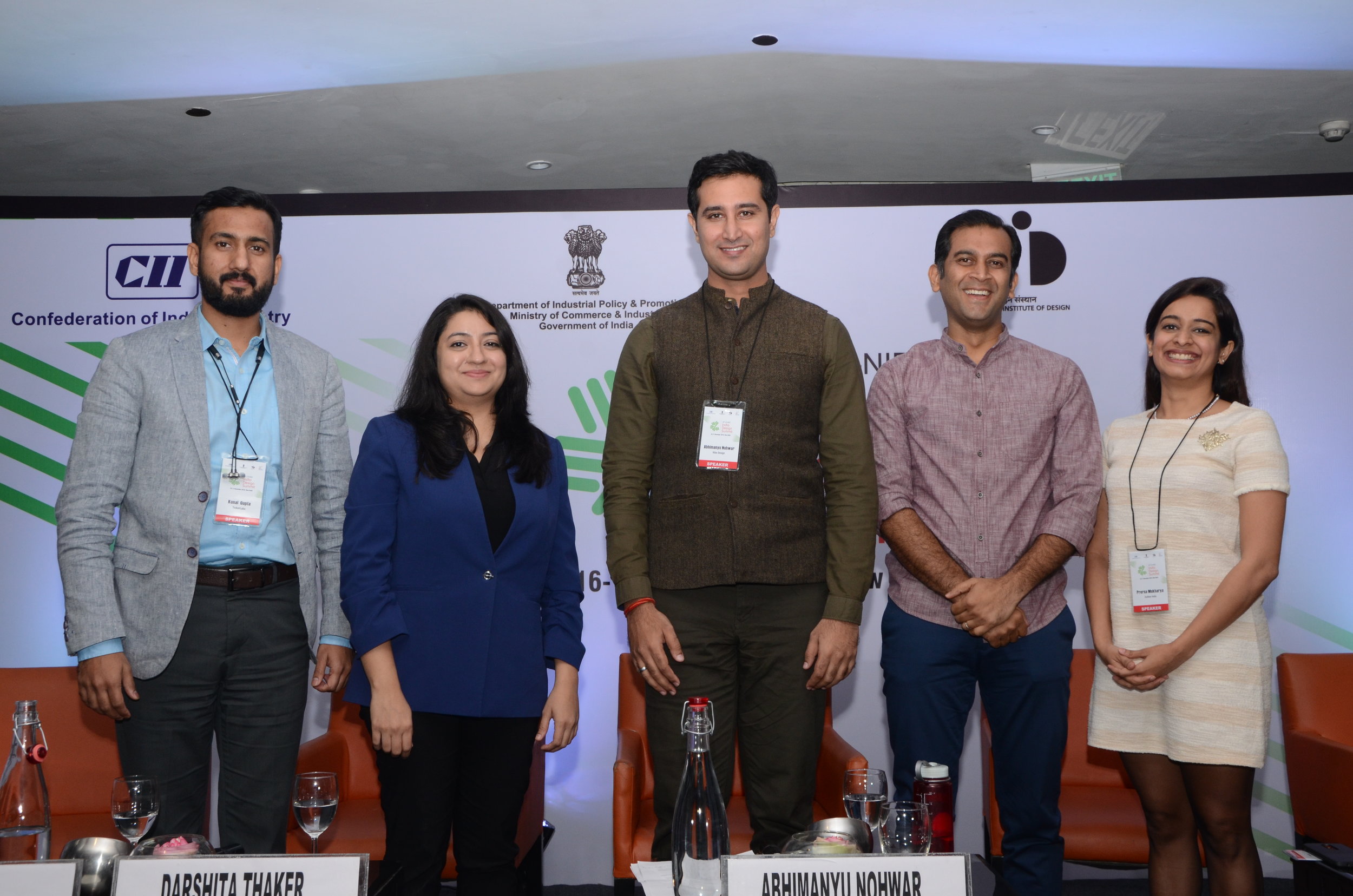
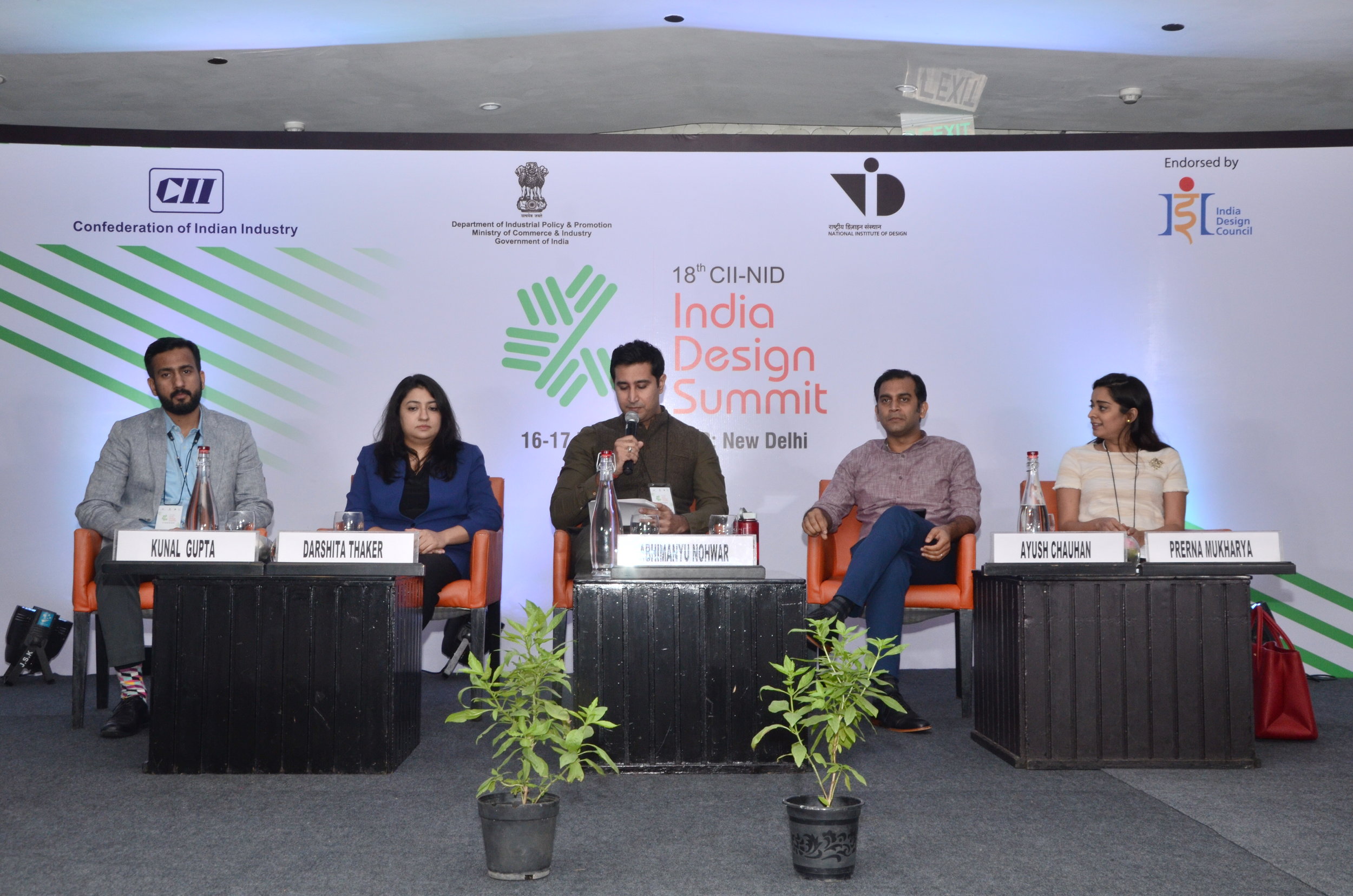
The official page for the event can be seen at CII’s website here.

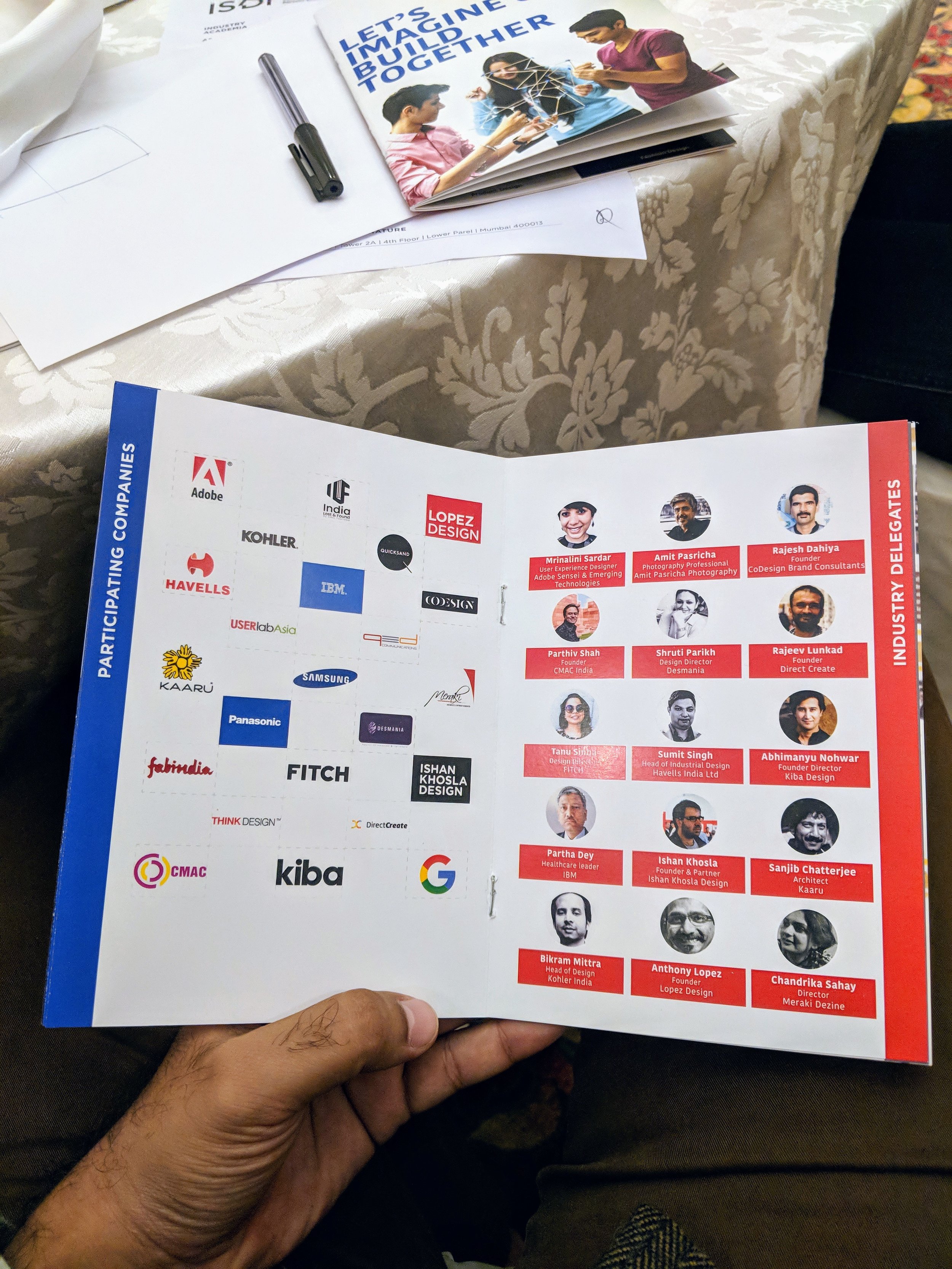
Panelist at a round table on Industry-Academia collaboration, by ISDI
Part of a panel discussion on “Reimagining Industry-Academia collaboration in the age of the Design Entrepreneur”, organised by Indian School of Design and Innovation (ISDI) Mumbai. Met some students and discussed their thesis projects, had the opportunity to discuss ideas on Design, Industry and Academia with design colleagues from Delhi.


Jury member for the James Dyson Award, India 2018
Abhimanyu Nohwar, Founder of Kiba Design, was the designer on a three-member jury panel that included Ravi Mokashi, a design educator at IIT Guwahati, and Nishant Padhiar, the editor of Stuff - a product review magazine. The judging was held in July 2018 with the winners being announced later in August.
